The humming silence of a power outage can range from a minor inconvenience to a major crisis, depending on your preparation. You’ve likely already tackled the crucial task of generator sizing, pinpointing exactly how much power your critical systems need. But the journey doesn't end there. The next, equally vital decision involves Selecting Generator Features & Fuel Types Post-Sizing. This isn't just about picking what's available; it's about optimizing for efficiency, reliability, cost, and compliance, ensuring your power solution truly meets your specific demands.
Choosing the right fuel and features for your generator system post-sizing can feel overwhelming, but it doesn’t have to be. As an expert who has seen countless power solutions implemented (and sometimes misimplemented), I'm here to guide you through the nuanced decisions that will secure your power future.
At a Glance: Your Post-Sizing Generator Checklist
- Fuel First: Different fuel types (diesel, natural gas, propane, gasoline) have distinct pros, cons, and operational profiles.
- Operation Defines Choice: Your generator's primary purpose—emergency backup, continuous prime power, or intermittent use—heavily dictates suitable fuel and features.
- Location, Location, Location: Local codes, fuel availability, and physical space are non-negotiable considerations.
- Beyond the Price Tag: A full life cycle cost analysis (initial, operational, maintenance, residual) offers the true financial picture.
- Safety Is Paramount: Proper installation, ventilation, and operational practices are critical for safety and longevity.
- Feature Flexibility: Portable, inverter, and whole-home (standby) generators each serve unique needs, even within the same fuel type.
Beyond the Kilowatts: Why Fuel Type & Features Demand Your Attention
You’ve done the math, added up your running watts, accounted for starting surges, and determined your ideal generator capacity. That's a huge step! But knowing you need "X" kilowatts is only half the battle. The choice of fuel, the type of generator, and its specific features will dictate its ongoing cost, environmental footprint, maintenance schedule, storage requirements, and ultimately, its reliability when you need it most.
Imagine investing in a powerful generator only to find its fuel is impossible to store on-site due to regulations, or its emissions profile makes continuous use impractical. These are the headaches we're here to help you avoid by making informed choices about your generator's very heartbeat: its fuel source and operational characteristics.
Decoding Generator Fuel Types: The Heart of Your Power Solution
The fuel your generator consumes isn't just a commodity; it's a critical component of its performance, cost-effectiveness, and environmental impact. Let's break down the major players.
Diesel Generators: The Unwavering Workhorse
Diesel generators are a long-standing favorite for their robust performance and reliability, especially in industrial and critical emergency backup scenarios.
- The Fuel: Typically, Diesel #2 distillate fuel oil is preferred for its lubrication properties and cost-effectiveness. Biodiesel exists, but its temperature sensitivity and shorter shelf life make it less ideal for long-term storage or emergency applications.
- Advantages You'll Appreciate:
- Low Flammability: Diesel fuel is less flammable than gasoline or propane, making on-site storage less hazardous.
- Ready Storage: Easy to store on-site in bulk, providing immediate fuel access during outages.
- Superior Transient Response: Diesel engines excel at handling sudden load changes, making them ideal for critical systems that demand instant power stability.
- Widespread Availability: Diesel fuel is readily available almost everywhere.
- Disadvantages to Consider:
- Emissions: Diesel engines produce higher emissions (particulate matter, NOx) compared to gaseous fuels. For non-emergency applications, strict EPA Tier 4 compliance is mandatory, adding complexity and cost.
- Fuel Costs: Generally, diesel fuel can be more expensive than natural gas, particularly for continuous, high-volume use.
- Noise Levels: Diesel generators are typically louder than their natural gas counterparts, though modern enclosures can significantly mitigate noise.
- Fuel Degradation: Diesel fuel degrades over time, requiring periodic testing and "polishing" (filtering and conditioning) to maintain quality for emergency readiness.
- Size & Cost: For smaller, portable applications, diesel units tend to be heavier and more costly.
- Tier 4 Compliance: A Crucial Detail: If your diesel generator will be used for anything beyond true emergency backup (e.g., peak shaving, prime power, or even extensive testing), it must meet EPA Tier 4 standards. These units incorporate sophisticated emission control systems like Selective Catalytic Reduction (SCR with DEF), Diesel Oxidation Catalysts (DOC), Diesel Particulate Filters (DPF), and Exhaust Gas Recirculation (EGR). These systems are effective but add to the initial cost, require maintenance, and their malfunction can even shut down the generator, emphasizing the need for expert upkeep. Tier 4 non-emergency operation is limited to 50 hours/year, with maintenance/testing capped at 100 hours/year.
- Ideal Applications: Industrial facilities, hospitals, data centers, or any situation demanding utterly reliable emergency backup power with on-site fuel storage. They are available in virtually any size.
Natural Gas Generators: The Clean, Continuous Provider
Natural gas generators are gaining traction for their environmental benefits and continuous operational potential, especially where a reliable utility gas line is present.
- The Fuel: An odorless gaseous mixture, predominantly methane, delivered via pipeline.
- Advantages You'll Appreciate:
- Environmentally Friendly: Significantly lower emissions than diesel, making them a preferred choice for areas with strict air quality regulations.
- Cost-Effective for Continuous Use: Natural gas is often cheaper than diesel per kilowatt-hour, especially for applications requiring extended run times or continuous power.
- No On-Site Fuel Storage: Eliminates the need for large, potentially hazardous fuel tanks, reducing space requirements and environmental concerns.
- Lower Noise: Generally quieter than diesel units of comparable size.
- Disadvantages to Consider:
- Higher Initial Cost: Units over 150 kW can have a higher upfront cost than equivalent diesel generators.
- Slower Transient Response: Particularly for larger units (>2500 kW), natural gas generators may exhibit a slower response to sudden load demands compared to diesel.
- Utility Reliance: You are beholden to the local utility's gas supply, which can be vulnerable to infrastructure failures (e.g., pipeline ruptures) or pressure limitations during peak demand. This makes them less resilient than diesel for some emergency scenarios.
- Larger Footprint: Natural gas engines can sometimes be physically larger than diesel counterparts for the same power output.
- Decarbonization Impact: Future decarbonization efforts may influence the long-term viability or cost of natural gas.
- Not Portable: Due to pipeline reliance, natural gas generators are fixed installations.
- Ideal Applications: Non-emergency continuous-use industrial applications (e.g., combined heat and power systems, grid stabilization), and utility redundancy where a robust gas infrastructure exists. Like diesel, they come in nearly any size.
Propane Generators: The Resilient Niche Player
Propane (LPG) generators offer a compelling alternative, particularly for smaller applications or as a backup to natural gas systems, balancing on-site storage with cleaner emissions.
- The Fuel: Liquefied petroleum gas (LPG), stored as a liquid under pressure, which then vaporizes into a gas for combustion.
- Advantages You'll Appreciate:
- Cleaner Emissions: Fewer emissions than diesel, making them more environmentally palatable for certain applications.
- Indefinite Shelf Life: Propane does not degrade over time, making it excellent for long-term on-site storage without fuel management concerns.
- On-Site Storage: Provides independence from the utility grid, offering resilience similar to diesel.
- Disadvantages to Consider:
- Higher Fuel Cost: Generally the most expensive fuel per kilowatt-hour among the major types.
- Higher Initial Costs: Often pricier than diesel units upfront.
- Low Energy Density: Requires larger storage tanks to hold the same energy equivalent as diesel, consuming more physical space.
- Increased Flammability: Propane is highly flammable, requiring strict safety protocols for storage and handling.
- Maintenance & Life Expectancy: Can sometimes have higher maintenance demands and a shorter overall life expectancy compared to diesel.
- Size Limitations: Primarily available in smaller sizes (typically less than 150 kW), though dual-fuel (natural gas/propane) options extend their utility.
- Ideal Applications: Residential whole-home backup, smaller commercial needs requiring on-site fuel without the complexities of diesel, or as a critical resilient backup where natural gas supply might be questionable.
Gasoline Generators: The Portable Pal
Gasoline generators are ubiquitous for their portability and ease of access, perfect for occasional, smaller-scale power needs.
- The Fuel: Derived from crude oil, widely available at gas stations.
- Advantages You'll Appreciate:
- Lightweight & Portable: Designed for mobility, making them easy to move to different locations.
- Quiet Operation: Generally quieter than diesel units, especially inverter models.
- Easy Fuel Purchase: Gasoline is universally accessible.
- Disadvantages to Consider:
- Low Fuel Efficiency: Requires frequent refueling, especially under higher loads.
- Highly Flammable: Gasoline poses a significant fire hazard and requires careful storage (draining old fuel for long-term safety).
- Higher Maintenance/Failure Rate: More components prone to failure compared to other types, potentially leading to higher maintenance costs and shorter lifespan.
- Size Limits: Typically restricted to small sizes (20 kW or less).
- Emissions: Better than older diesel, but worse than modern natural gas or propane.
- Ideal Applications: Camping, tailgating, DIY projects, small residential power outages for essential circuits, construction work sites.
Beyond Fuel: Key Generator Features & Types to Consider
Once you've zeroed in on a fuel type, the next layer of decisions involves the generator's form factor and specialized features. This is where your specific operational needs truly define the "what."
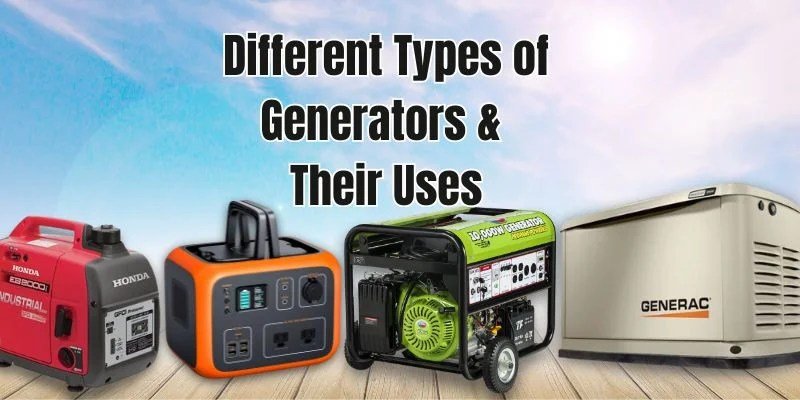
Portable Generators: Power on the Go
These are the go-to for temporary, mobile power solutions.
- Capabilities: Capable of powering TVs, small appliances, power tools, and lights.
- Best For: Camping trips, job sites, and providing temporary power to specific circuits in your home during an outage. They offer flexibility but require manual setup and refueling.
Inverter Generators: Quiet & Efficient Portability
A specialized type of portable generator, ideal for sensitive electronics.
- Key Features: Lightweight, exceptionally quiet, and produce "clean" power (stable sine wave) perfect for laptops, smartphones, and other delicate devices.
- Limitations: Generally have limited power output compared to conventional portable or standby generators.
- Best For: RV camping, tailgating, or powering a few essential devices where noise is a major concern.
Whole-Home (Standby) Generators: The Ultimate Automatic Backup
These are the workhorses of residential and commercial backup power, providing seamless, automatic operation.
- Installation: Permanent installations, typically connected to your natural gas line or a large liquid propane tank.
- Automation: They automatically detect a power outage, start up, transfer the load, and shut down when utility power returns, all without manual intervention.
- Power & Cost: Most powerful option, designed for extended durations. They are also the most costly initially and require professional installation and ongoing maintenance.
- Best For: Ensuring continuous power for an entire home or critical business operations, providing peace of mind during prolonged outages.
The Four Pillars of Fuel Type Selection: Your Actionable Framework
With an understanding of the available fuels and generator types, it's time to apply a structured approach to make the best choice post-sizing. This framework is designed to move you from broad considerations to specific, cost-effective decisions.
Step 1: Understand Your Demand & Load Profile (Revisited)
You’ve already calculated your kW needs, but let's briefly revisit the nature of that demand.
- Load Profile: Is your demand constant or highly variable? Are there significant motor starts?
- Residential: Often bursty, with appliances cycling on and off.
- Commercial/Industrial: Can be consistent (e.g., data centers) or involve large, intermittent loads (e.g., machinery).
- Generator Capacity:
- Emergency standby generators are typically optimized to run efficiently at around 70% of their rated load.
- Prime or continuous-rated units are designed for 100% load.
- Fuel Type Impact: Your capacity needs significantly influence which fuel types are even feasible. For instance, propane and gasoline become impractical or impossible for very high-capacity requirements due to fuel storage and generator availability limitations. If your power requirements are substantial, you'll likely be looking at diesel or natural gas. This is where the initial sizing work for calculating your generator size really pays off.
Step 2: Define Your Generator's Mission
The "why" behind your generator is paramount. Is it a lifeline or a convenience?
- Emergency Backup: Must start within 10 seconds of an outage (NFPA 110 standard). Diesel excels here due to its rapid transient response and on-site fuel. Some natural gas units can meet this, but check specifications carefully.
- Standby Systems: Similar to emergency but may have slightly more leeway on start time, though still focused on reliability during outages. Whole-home propane or natural gas units fit well here.
- Primary/Prime Power: The generator is the main source of power for extended periods, perhaps daily. This shifts the focus heavily towards fuel efficiency and cost-per-kilowatt-hour. Natural gas often shines for continuous use.
- Non-Emergency Use: This includes applications like peak shaving (running the generator during peak demand to reduce utility costs), demand response (generating power when the grid needs it), or simply as supplementary power.
- Crucial Note on Emissions: Any non-emergency operation must comply with EPA emission regulations. For diesel, this means Tier 4 compliance, which brings significant additional costs and operational constraints (limited run hours for non-emergency use). Natural gas and propane generally have an easier time meeting these standards.
Step 3: Uncover Local Limitations & Practicalities
Your ideal choice must also contend with the real-world constraints of your location.
- Codes and Ordinances:
- Federal/State/Local: Regulations vary wildly. For instance, the National Electrical Code (NEC) may require dual-fuel capability or extensive on-site fuel storage for emergency/standby generators. NFPA 110 sets specific standards for fuel storage and system reliability. Local noise ordinances can dictate generator placement, enclosure types, or even permissible run times. Always check with your local authority having jurisdiction (AHJ).
- Fuel Availability:
- Natural Gas: Do you have a reliable natural gas line to your property? Is the pressure sufficient for your generator's needs? What's the historical reliability of your local gas utility?
- Diesel/Propane: How easily can bulk fuel be delivered to your site? Are there reliable local suppliers? For propane, what are the requirements for tank placement and sizing?
- Physical Limitations:
- Space: Generators themselves take up space, but don't forget fuel tanks (especially for propane), emission control equipment (for Tier 4 diesel), and required clearances for ventilation and maintenance. Diesel and large propane tanks require substantial footprint.
- Noise: Can you site the generator far enough away from residential areas or noise-sensitive zones to comply with regulations, or will you need costly sound attenuation enclosures?
- Manufacturer and Service Availability:
- Are there local dealers or service representatives for your chosen generator brand and fuel type? Ease of access to parts, maintenance, and emergency service is critical for long-term reliability. A generator is only as good as the support system behind it.
Step 4: Conduct a Real-World Life Cycle Cost Analysis
The sticker price is just the beginning. A true comparison requires a comprehensive look at the total cost of ownership over the generator's expected lifespan.
- Initial Expenses:
- Generator Purchase: The unit itself.
- Installation Costs: Foundation, electrical wiring (including transfer switch), fuel line connections, exhaust systems, emission controls (for Tier 4 diesel), sound attenuation, fencing/enclosures.
- Fuel Storage: Cost of tanks (diesel, propane) and associated infrastructure.
- Permitting: Fees for local permits and inspections.
- Future Expenses (Operational & Maintenance):
- Fuel Costs: This will be your largest ongoing expense. Calculate based on estimated run hours, load, and current fuel prices for each type. Remember, fuel price volatility is a factor.
- Maintenance: Regular service, oil changes, filter replacements, spark plugs (gas), DEF refills (for Tier 4 diesel), fuel polishing (diesel), battery checks. Consider a service contract.
- Repairs: Costs associated with unexpected breakdowns.
- Insurance: Increased premiums for on-site fuel storage or complex systems.
- Compliance Costs: Ongoing monitoring or reporting for emission regulations if applicable.
- Residual Value:
- What will the generator be worth at the end of its useful life? Diesel generators often retain higher resale value due to their robust construction and universal appeal.
By methodically comparing feasible options across these four steps, you’ll not only find a generator that meets your technical requirements but also one that aligns with your budget, operational philosophy, and long-term goals.
Ensuring Safe & Sound Operation: Essential Safety Measures
No matter which generator you choose, safe operation is non-negotiable. These practices protect your property, your family, and your investment.
- NEVER Indoors: This is the golden rule. Generators produce carbon monoxide (CO), an odorless, colorless, deadly gas. Operating a generator in an enclosed space—garage, basement, shed, or even an attached patio—can be fatal.
- Maintain Distance: Position running generators at least 20 feet from your home, windows, doors, and vents. Ensure the exhaust is directed away from any building. Even in an open space, CO can seep into buildings.
- Professional Connection: Do not plug generators directly into standard wall outlets (backfeeding). This can send electricity back into the utility grid, endangering utility workers and potentially others. Always have a qualified electrician install a proper transfer switch. This safely isolates your home from the utility grid during generator operation.
- Avoid Overloading: Ensure the generator's wattage rating matches or exceeds the total starting and running watts of all connected appliances. Overloading can damage the generator and the appliances, and is a fire hazard. Remember your sizing efforts here – it’s crucial.
- Fuel with Care: Allow gasoline-powered generators to cool completely before refueling. Gasoline is highly flammable, and spilled fuel on a hot engine can ignite. Avoid overfilling the tank. Store fuel safely in approved containers away from living areas.
- Protect from Elements (Safely): Do not operate generators in rain or snow unless they are housed in a covered, well-ventilated shelter specifically designed for generator use. Ventilation is key to prevent CO buildup and overheating.
Your Power Resilience Partner: Why Generators Are a Must-Have Investment
In an increasingly unpredictable world, the ability to generate your own power is more than a luxury—it's a critical investment in resilience. Power outages, whether from severe weather events, grid overloads, or utility infrastructure failures, are becoming more frequent and can last anywhere from a few hours to several weeks.
Beyond the immediate inconvenience of darkness, an outage can cripple essential daily tasks, disrupt businesses, spoil food, and even compromise critical medical equipment. A thoughtfully selected and properly installed generator provides security, maintains comfort, and ensures continuity. It's an investment in peace of mind, allowing you to weather any storm with confidence, knowing your essential services remain operational.
Making Your Final Decision: Your Next Steps
You've explored the diverse world of generator fuel types and features, understood the crucial selection framework, and grasped the vital safety protocols. Now, it's time to translate this knowledge into action.
- Re-evaluate Your Needs: With the insights gained, revisit your post-sizing requirements. Are there nuances in your operational demand or local environment you hadn't fully considered?
- Consult Local Experts: Reach out to local generator dealers, certified electricians, and your utility company. They can provide invaluable site-specific advice on fuel availability, gas line pressure, local codes, and installation requirements.
- Get Quotes & Compare: Obtain detailed quotes for your top 2-3 generator and fuel type combinations, ensuring they include not just the unit cost, but also installation, fuel storage, and estimated maintenance. Use these to perform your life cycle cost analysis.
- Prioritize Reliability: In emergency situations, reliability is paramount. Don't let a small initial saving compromise the core purpose of your generator.
- Plan for Maintenance: Understand the maintenance schedule and costs for your chosen system. Regular maintenance is key to longevity and reliability.
By following these best practices for selecting generator features and fuel types post-sizing, you'll be well-equipped to make a decision that powers your peace of mind for years to come.